Commercial driveway pressure washing: Recycling & Sustainability
Our approach to sustainable commercial driveway pressure washing blends practical waste management with a commitment to low-carbon operations. We focus on preventing pollution at source, segregating materials on-site and channeling recoverable waste back into local recycling systems. Every load is treated as a resource rather than refuse, and our procedures are built around reuse, recovery and community benefit.Recycling targets and measurable goals
We have set a clear recycling percentage target: an initial 85% recovery rate for non-hazardous materials within the next 24 months, moving to a long-term ambition of 90% recycling or reuse by 2028. These figures cover sediment, aggregates, organic garden waste and reusable paving materials recovered during commercial driveway cleaning and related services. Progress is tracked via waste transfer notes, segregation audits and quarterly sustainability reports.
Local transfer stations and compliant disposal
We deliver sorted waste to approved local transfer stations and civic amenity sites, ensuring that each waste stream follows the right route: inert materials to aggregate recyclers, organic matter to composting facilities, and any regulated oily residues to licensed hazardous waste handlers. Where boroughs operate specific waste separation schemes (e.g., separate bins for glass, paper, food, garden waste and residual), we align our on-site sorting to mirror those systems so materials enter the borough network cleanly.Our practical recycling activities on commercial sites include a mix of mechanical separation and hand-sorting to capture value from mixed debris. Typical streams handled include:
- Aggregates and crushed concrete – reclaimed and crushed for reuse in sub-bases;
- Vegetation and green waste – placed into a dedicated rubbish gardening area for composting or delivered to municipal composting schemes;
- Plastic and packaging – removed and sent to kerbside recycling or sorting facilities;
- Oils and hydrocarbons – collected in secure containers and taken to licensed hazardous waste transfer stations;
- Metal fixings and grates – recovered for metal recycling where possible.
By matching site separation to local authority expectations, we reduce contamination rates and increase the yield that actually reaches recycling markets. For example, boroughs that use three-way kerbside separation (paper/card, mixed containers, and residual) benefit from our pre-sort steps, which reduce cross-contamination and improve end-market value.
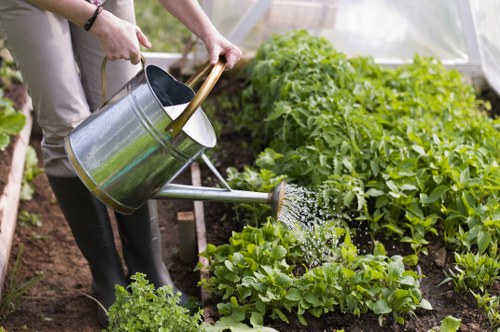 Sustainable rubbish gardening area and resource loops — A designated gardening area on or near the site collects organic trimmings, soil, leaf litter and biodegradable sweepings. These are cycled back into landscaping projects or composted for use in sustainable verge works and community planter schemes. The rubbish gardening area is managed to prevent run-off and encourage on-site reuse, turning green waste into a local soil amendment rather than sending it to landfill.
We also prioritise partnerships with charities and community groups: reusable paving slabs, undamaged concrete setts and serviceable planters are offered to local social enterprises and community allotments. These collaborations create circular outcomes — materials recovered during commercial driveway jet washing are given a second life in community landscaping rather than being downcycled or discarded.
To lower our operational footprint we deploy a fleet of low-carbon vans and vehicles designed for pressure cleaning logistics. Our fleet mix includes electric vans for local rounds, plug-in hybrids for longer runs and efficient Euro-compliant diesel units for heavy loads. Route optimisation software reduces miles travelled and idling time, and vans are equipped with compact filtration and water-recovery systems to minimize freshwater use.
 Compliance, monitoring and continuous improvement are built into every contract. We use sediment interception, oil/water separators on-site and documented waste transfer records to ensure traceability from driveway to transfer station. Environmental audits and regular reviews of our recycling percentage target help us improve processes and reduce residuals. We also adopt biodegradable cleaners where practical to cut chemical load in runoff streams.
Community alignment is central: our charity partnerships are governed by clear handover protocols so that reusable materials are safe and suitable for reuse. Local civic amenity sites and transfer stations receive segregated loads that comply with borough-specific requirements, supporting municipal recycling schemes. We avoid contaminating borough streams and help bolster local recycling metrics.
 In summary, our commercial driveway pressure washing services are designed to be as sustainable as possible: a strong recycling target, collaboration with local transfer stations and charities, a dedicated rubbish gardening area for green waste reuse, and a low-carbon transport strategy. We believe small operational choices—proper sorting, conscious disposal and community partnerships—deliver measurable environmental benefits for businesses and boroughs alike.